
Understanding the ATR Pocket Option Indicator for Effective Trading
The ATR Pocket Option Indicator is a crucial tool for traders seeking to enhance their market analysis and decision-making process. It stands for Average True Range and is extensively used to measure market volatility. By understanding how to integrate this indicator into your trading strategies, you can make more informed decisions, manage risk effectively, and improve your overall trading performance. For more detailed insights about this indicator, you can visit ATR Pocket Option Indicator https://trading-pocketoption.com/indikator-atr/.
What is the ATR Pocket Option Indicator?
The ATR Indicator is derived from the Average True Range, a technical analysis tool developed by J. Welles Wilder Jr. in the late 1970s. Unlike most indicators that provide signals for buying or selling, the ATR focuses solely on volatility. It shows how much an asset price has fluctuated over a specific period, making it invaluable for traders who want to assess potential price movements and set adequate stop-loss and take-profit levels.
How Does the ATR Work?
The ATR is calculated by taking the average of true ranges over a specified number of periods (typically 14). The true range is defined as the greatest of the following:
- The current high minus the current low.
- The absolute value of the current high minus the previous close.
- The absolute value of the current low minus the previous close.
Traders can thus use this information to better understand market conditions. A high ATR indicates high volatility, while a low ATR suggests a more stable market.
Importance of ATR in Trading
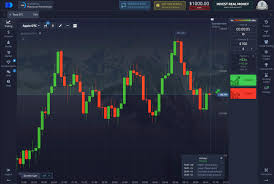
1. Volatility Measurement: ATR provides traders with an objective measure of market volatility. This is crucial for various trading strategies, especially those focusing on breakouts or reversals.
2. Risk Management: By understanding volatility through ATR, traders can set more appropriate stop-loss levels based on current market conditions. This can lead to better risk management and help minimize losses.
3. Position Sizing: The ATR can also aid in determining position sizes. A higher ATR suggests a larger potential price movement, which might warrant a smaller position size to maintain risk at acceptable levels.
4. Indicator for Entry and Exit Points: Many traders use ATR in conjunction with other indicators to refine entry and exit points. For example, a combination of ATR and moving averages can help traders identify potential trend reversals or continuation.
How to Set Up the ATR Indicator in Pocket Option
Setting up the ATR Indicator in the Pocket Option platform is straightforward. Here’s how you can do it:
- Log in to your Pocket Option account.
- Select the asset you want to trade.
- Open the indicators panel.
- Find the ‘ATR’ option and click to add it to your chart.
- Adjust the settings according to your trading strategy (typically, the default setting of 14 periods is sufficient).
Once the ATR is applied to your charts, you can start analyzing the volatility and making informed trading decisions.
Strategies Using ATR Pocket Option Indicator

Here are some strategies that incorporate the ATR Pocket Option Indicator:
1. Breakout Trading
Traders can use the ATR to identify breakout opportunities. When the ATR is increasing, it suggests increasing volatility, signaling that a breakout may occur soon. If the price breaks above resistance with a high ATR, it may confirm a strong bullish signal.
2. Trend Following
Traders can use the ATR in conjunction with trend indicators to enter trades. For instance, an increase in ATR while following an upward trend may indicate a continuation. Conversely, a decreasing ATR in a downward trend may suggest a potential reversal or consolidation.
3. Setting Stop-Loss Levels
By multiplying the ATR by a factor (e.g., 1.5 or 2) and subtracting it from the entry price, traders can set a dynamic stop-loss level that adjusts according to current volatility. This method helps protect profits and limit potential losses.
Conclusion
The ATR Pocket Option Indicator is an essential tool for any trader looking to enhance their market analysis and risk management. By providing a clear picture of market volatility, it allows for better decision-making and strategy formulation. Understanding how to utilize the ATR effectively can lead to more successful trading outcomes and an improved overall trading experience. Remember to combine the ATR with other tools and indicators for optimal results and to ensure that your trading strategies are robust and well-rounded.
]]>